Every commercial building depends on equipment and systems that will eventually need repairing, upgrading or replacing. Electrical installations, lighting, security systems, access control and communications infrastructure all have a working lifespan, but knowing when to invest in them is not always straightforward.
Replacing equipment too early can create unnecessary costs. Leaving it too long can lead to repeated faults, unreliable performance and disruption to business operations.
For commercial property owners and facilities managers across Birmingham, Walsall and the wider Midlands, asset lifecycle planning offers a more organised way to make these decisions.
Meridian Integrated Systems supports businesses through facilities management, planned maintenance and specialist technical services designed to protect the long-term performance of commercial buildings.
What Is Asset Lifecycle Planning?
Asset lifecycle planning is the process of managing building equipment and infrastructure throughout its working life, from installation and regular maintenance through to eventual replacement.
Rather than waiting for a system to fail, businesses monitor its condition, performance, maintenance history and ongoing costs.
This helps determine whether an asset should continue receiving routine servicing, undergo repairs or be replaced with a more suitable system.
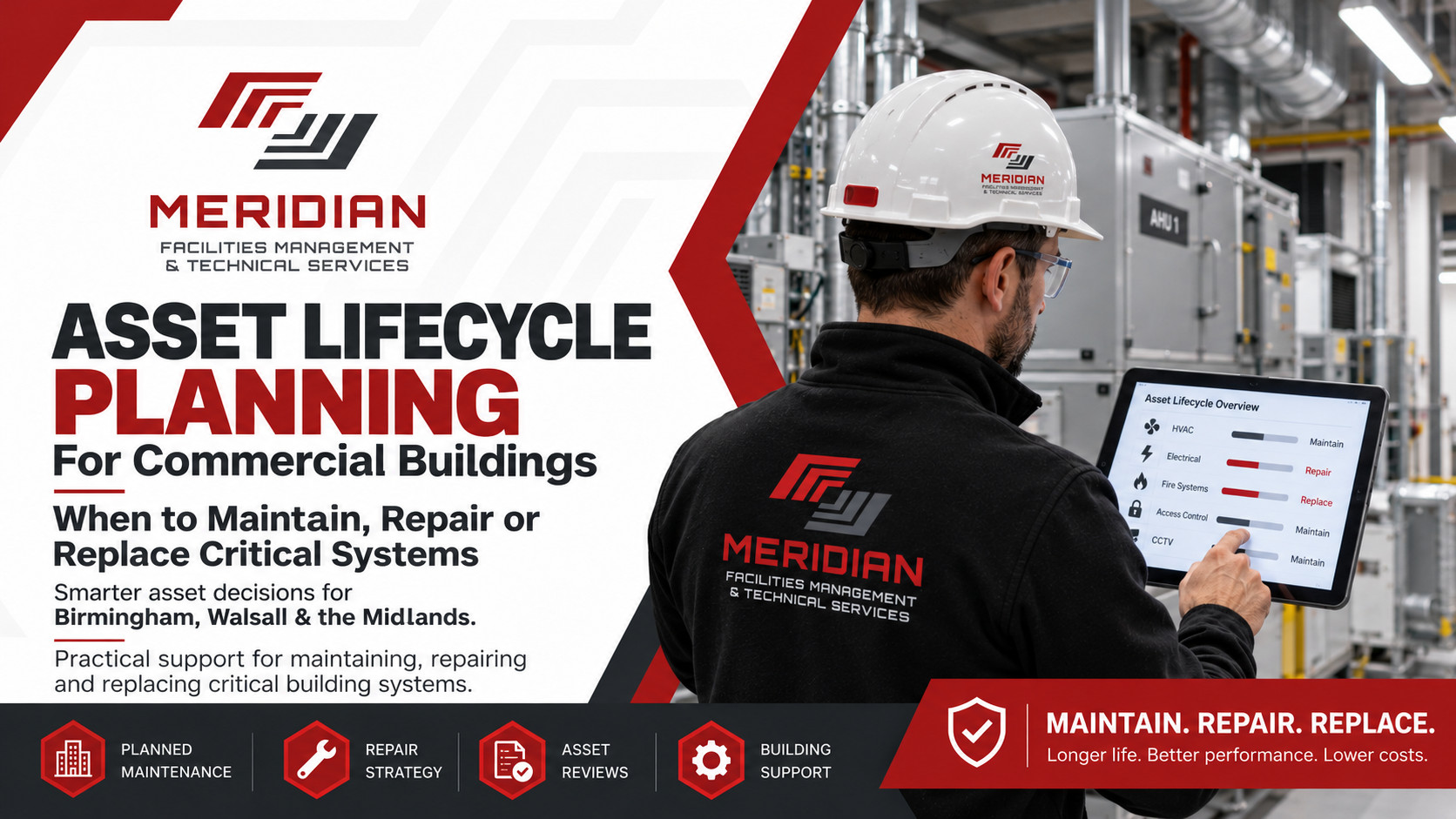
For example, an older CCTV system might still work reliably with regular maintenance, while a repeatedly failing access control panel may be better replaced. The right decision depends on the equipment’s condition, repair history, availability of replacement parts and importance to the building.
When Is Regular Maintenance the Best Option?
Maintenance is generally the most practical option when equipment remains reliable, is suitable for its intended use and has no significant faults affecting safety or performance.
Planned preventative maintenance (PPM) helps businesses protect existing assets through scheduled inspections, servicing and testing.
A structured planned preventative maintenance programme can help identify early signs of deterioration and prevent minor issues from developing into more expensive problems.
Maintenance is often appropriate when:
- The system continues to operate reliably
- Replacement parts remain available
- Servicing costs are reasonable
- Inspections identify no significant safety concerns
- Equipment still meets the building’s operational requirements
The Health and Safety Executive provides guidance on the importance of maintaining work equipment safely, including planned servicing, competent maintenance and identifying faults before they create additional risks.
For commercial buildings, keeping equipment in good condition can extend its useful life and reduce the frequency of unexpected breakdowns.
When Should a Building System Be Repaired?
Repairs become necessary when an asset develops a fault but remains suitable for continued use once the issue is resolved.
A faulty lighting circuit, damaged CCTV camera, access control reader or electrical component may not require a complete system replacement.
In these situations, identifying the cause of the problem is important.
For example, a recurring access control fault might be caused by damaged cabling or a failing power supply rather than the access system itself. Replacing the entire installation without investigating the fault could result in unnecessary spending.
A repair may be the better option when the issue is isolated, suitable parts are available and the work is expected to restore dependable performance.
However, businesses should also consider previous repairs. If the same component fails repeatedly, continuing to replace individual parts may eventually become less economical than upgrading the system.
Signs That Replacement May Be More Cost-Effective
There comes a point when maintaining an ageing system no longer represents good value.
Equipment may become increasingly unreliable, repairs may take longer because replacement parts are difficult to obtain, or the system may no longer meet the building’s requirements.
Common signs that replacement should be considered include:
- Frequent breakdowns or repeat faults
- Rising maintenance and repair costs
- Limited availability of spare parts
- Outdated equipment that cannot support current requirements
- Reduced performance or reliability
- Significant safety concerns
- Changes to the building that require additional capacity
For example, an older electrical distribution system may no longer be suitable for a building that has undergone several changes in use. Similarly, an outdated CCTV installation may not provide the coverage or recording capabilities required by an expanding commercial site.
Replacement decisions should consider both immediate costs and the expected benefits over the system’s remaining working life.
Why Asset Records Matter
Asset lifecycle planning becomes much easier when businesses maintain accurate information about their building systems.
Without reliable records, facilities managers may struggle to establish how old equipment is, when it was last serviced or how often it has required repairs.
A useful asset register should include:
- Equipment type and location
- Installation date, where known
- Manufacturer and model details
- Maintenance and inspection history
- Previous faults and repairs
- Warranty information
- Estimated remaining service life
- Recommended replacement priorities
These records help businesses identify ageing equipment and plan expenditure before critical systems fail.
They are particularly useful for organisations managing several commercial properties, where different buildings may have equipment of varying ages and conditions.
Planning Around Different Commercial Buildings
Commercial buildings across Birmingham and Walsall have very different operational requirements.
An office in Birmingham’s Jewellery Quarter may rely heavily on lighting, access control, data infrastructure and communications systems. A warehouse in Aston, Tyseley or Wednesbury may depend on electrical distribution, external security, loading bay lighting and reliable entry systems.
Industrial premises around Aldridge, Darlaston and the wider Black Country may also operate for extended hours, meaning maintenance and replacement work must be planned around production or deliveries.
These differences affect how important individual assets are to the business.
A failed component in a rarely used area may be relatively straightforward to replace. The same type of failure affecting a main entrance, electrical distribution board or critical security system could cause significant disruption.
Asset lifecycle planning helps businesses prioritise equipment according to its condition, safety implications and importance to daily operations.
Budgeting for Future Repairs and Replacements
One of the biggest advantages of asset lifecycle planning is the ability to prepare for future expenditure.
Instead of facing unexpected replacement costs, businesses can identify equipment approaching the end of its useful life and plan upgrades over time.
This may involve replacing ageing lighting in stages, upgrading security equipment during a planned refurbishment or scheduling electrical infrastructure improvements outside normal operating hours.
It also allows businesses to distinguish between routine maintenance budgets and larger capital investments.
For organisations managing multiple sites across Birmingham, Walsall and the Midlands, this provides greater control over spending and helps prevent several expensive replacements falling due at the same time.
How Facilities Management Supports Asset Lifecycle Planning
Effective asset management requires more than recording the age of equipment.
Building systems need regular inspections, reliable maintenance records and a clear process for assessing faults. Decisions should also consider how different systems work together.
Meridian Integrated Systems combines facilities management with technical experience in electrical infrastructure, security systems and building maintenance.
This allows critical assets to be considered as part of the wider operation of a commercial property.
Through planned maintenance, condition monitoring, reactive support and contractor coordination, businesses can gain a clearer understanding of which systems are performing well and which may require future investment.
Asset Lifecycle Planning in Birmingham and Walsall
For businesses managing offices, warehouses, schools, healthcare environments and industrial premises, asset lifecycle planning helps protect building infrastructure while keeping maintenance costs manageable.
Meridian Integrated Systems supports commercial and industrial properties across Birmingham, Walsall and the wider Midlands with structured facilities management and specialist technical services.
Our approach focuses on keeping essential systems reliable, maintaining clear records and helping businesses plan maintenance and replacement work around their operational requirements.
Speak to Meridian Integrated Systems
Knowing when to maintain, repair or replace building equipment can make a significant difference to long-term costs and operational reliability.
With a structured asset lifecycle plan, businesses can reduce unexpected failures, prioritise investment and make better decisions about their commercial infrastructure.
Meridian Integrated Systems provides facilities management, planned preventative maintenance, electrical services and security system support across Birmingham, Walsall and the Midlands.
Contact our team today to discuss asset management and maintenance planning for your commercial premises.
Do you need help from our experts?
Give us a call today to get expert advice and support from our experienced team.